

Across Africa, the roar of the lion is growing fainter. Once spread across vast landscapes, the African lion has disappeared from 92% of its historical range. A century ago, an estimated 200,000 lions roamed the continent; today, that number has dropped to just 20,000–30,000.
In Kenya, fewer than 2,500 lions remain. The reasons are complex: shrinking habitats, conflicts with people when livestock is lost, climate change, disease, and the expansion of infrastructure all play a part. For a species that needs vast territories and abundant prey, survival outside protected parks and reserves is becoming difficult.
Yet, the future of lions lies largely in the hands of the people who share the land with them.
Changing Perceptions, One Child at a Time
In Samburu, where Ewaso Lions works, many children grow up within sight of wildlife reserves but have rarely experienced wildlife in a safe, positive way.
For some, lions are not majestic animals from storybooks, but threats: the predators that killed a family’s livestock, or the reason they run in fear when herding goats.
Recognising that children are new stewards of Kenya’s wildlife, Ewaso Lions launched the Lion Kids Camp (LKC) in 2013. The programme blends wildlife education, guided safaris, and conservation-themed activities to enhance knowledge of nature.
While the camp initially targeted school-going children, the team quickly identified a gap: pastoralist children who herd livestock from an early age. These young herders often have the greatest day-to-day impact on wildlife, yet have the least access to conservation education.
To reach them, Ewaso Lions developed a five-day, hands-on curriculum that relies on tactile and visual experiences, ensuring it works for both literate and non-literate children. One of its most successful activities is an innovative, laughter-filled obstacle course with a serious purpose: the Ewaso Lions Conservation Game.
Ewaso Lions Conservation Game
First introduced in April 2015, the Ewaso Lions Conservation Game transforms complex conservation challenges into an energetic and interactive experience.
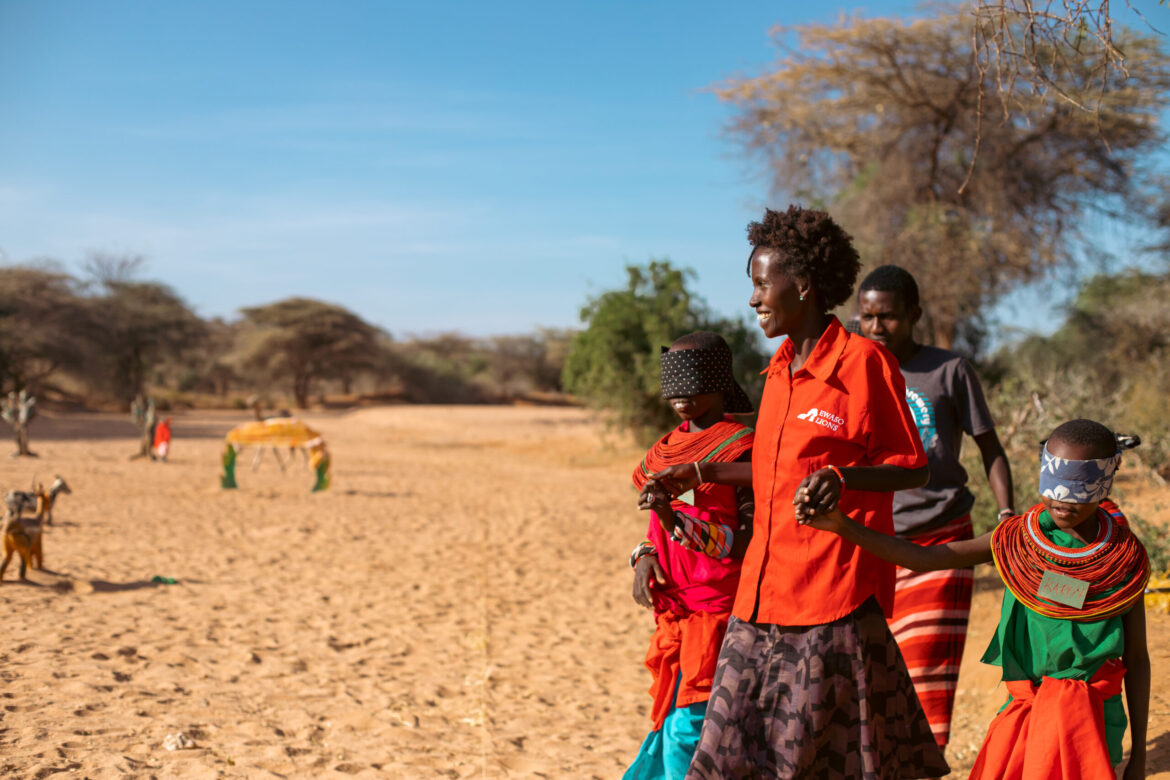
Children are divided into teams, each representing a pride of lions. One member, acting as the pride leader, must guide their “lions” (team members) safely through a “community area” (the obstacle course), collecting key resources like water, prey, safe refuges, and protection while avoiding dangers like settlements, livestock, poachers, rabid dogs, bushfires, and highways.
There’s a twist: all “lions” except the leader are blindfolded, meaning teamwork, trust, and clear communication are essential.
Each obstacle and checkpoint represents a real-world survival factor for lions living alongside people. The game ends with a group discussion that connects each part of the course to actual conservation issues and solutions.


What the Game Teaches
Through play, participants learn:
- The needs of lions living in community lands
- The threats lions face, from habitat loss to disease
- How human activities can help or harm lion survival
- Practical ways people can coexist with large carnivores
And beyond the knowledge, the game builds knowledge and empathy. Children begin to see lions not just as predators, but as fellow creatures navigating a dangerous world.
Ripple Effects in the Community
Although designed for children, the game’s appeal has reached herders, warriors, women, and elders, literate or not. In every group, it ignites conversations about coexistence and inspires positive attitudes toward wildlife.
From Kenya to the World
What began as a local initiative has proven adaptable across countries and species. The Conservation Game has been tailored and played in Mozambique, Ethiopia, Peru, and Botswana, each time contextualised to the local wildlife and challenges.
Why It Matters
Lions are not just icons of Africa; they are vital to healthy ecosystems. Protecting them requires more than safeguarding parks and reserves. It means working with the people who share their landscapes, building understanding, and turning fear into respect.
In Samburu, this work starts with a simple truth: if you want to change the future, start with the children. Sometimes, that change begins with a blindfold, an obstacle course, and the laughter of a “pride” learning to survive together.
- Read the full game concept: Download the Conservation Game Guide (PDF)
- Share your feedback: If you adapt the game in different contexts, please fill out our short survey. Your input will help us improve and inspire more communities to use the game as a tool for conservation and coexistence.


