
If you have been following the Mama Simba habitat recovery journey, you know this moment has been a long time coming.
What started as an initiative for the Mama Simba to recover the land that lions and local communities depend on is becoming real — rooted. A story of patience, learning, and building with your own hands. It is just the beginning.
Why habitat recovery
Lion conservation in the Ewaso Lions’ area of operation is inseparable from the health of the land itself. When habitat degrades, when invasive species crowd out native vegetation, when shade disappears and cover thins, lions and other wildlife lose more than comfort. They lose the dense bush that makes hunting possible. They lose the resting spots that allow them to move through a shared landscape with less friction. They lose the essential thick areas needed to hide their cubs. When wildlife, especially predators, struggle, the ripple effects reach the livestock and the livelihoods of the pastoral communities who live alongside them. Habitat recovery is thus central to the long-term future of lion conservation in this region.
It started with learning
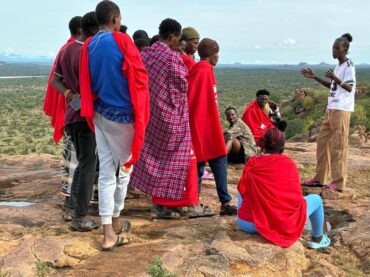
In May 2025, Mama Simba travelled to the Centre for Ecosystem Restoration Kenya (CER-K) at Brackenhurst, Limuru, for an intensive five-day training. There, they learned two critical skills: how to identify and tackle Mathenge (Prosopis juliflora), the invasive species quietly choking out native vegetation across the landscape, and how to propagate Salvadora persica (toothbrush tree), an indigenous species that provides lions with dense cover for hunting, hiding cubs and shade for rest. The training was rigorous and practical. It was hands in soil, eyes on species, knowledge transferred directly between people who care deeply about this land.
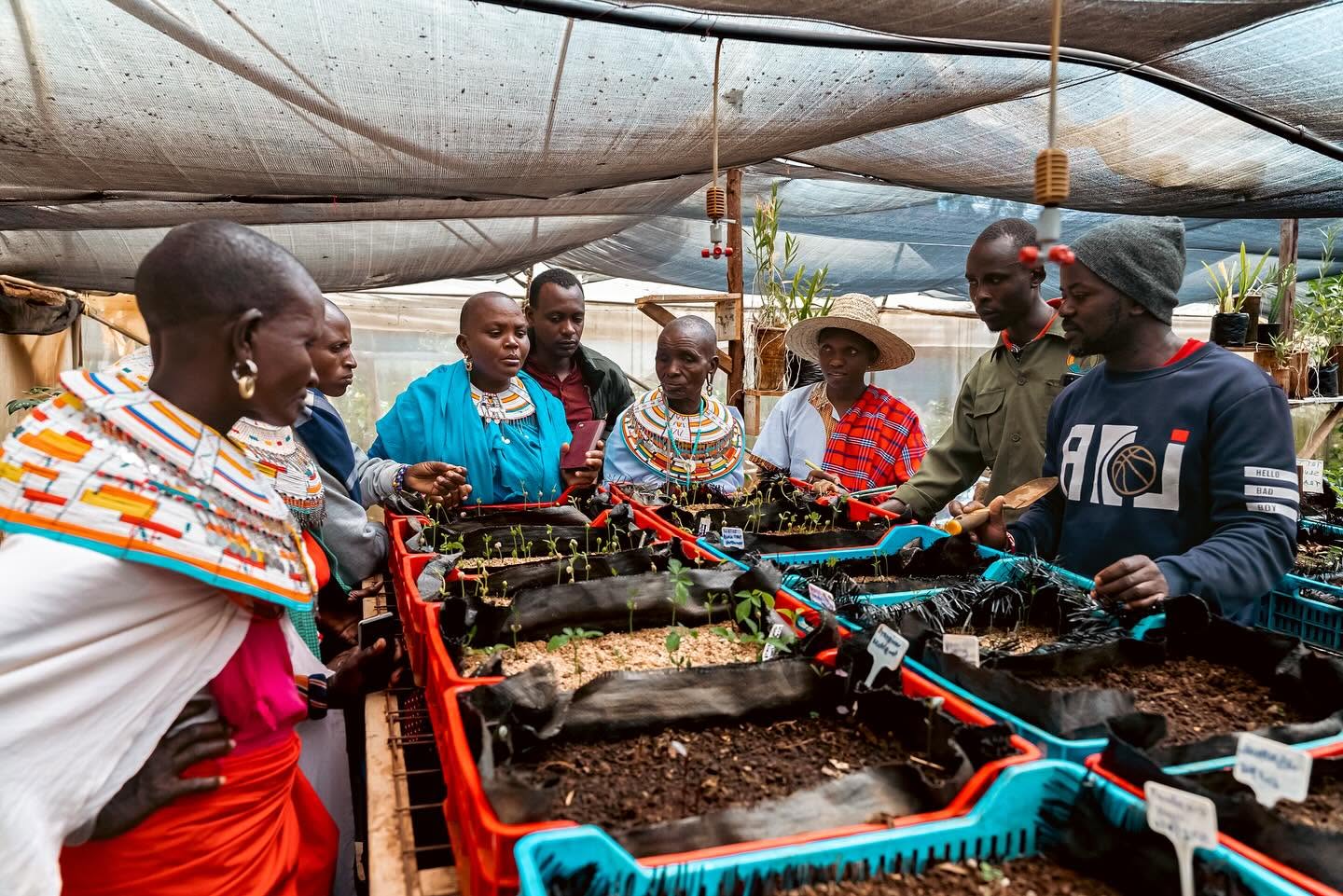
Mama Simba during their training at CER-K
Building from scratch
By March 2026, that intention had taken physical form. With their own hands, the Mama Simba built a tree nursery, a dedicated, structured space to cultivate the seedlings that would eventually return to the land. They built it themselves, and in doing so, they built an initiative that belongs to them.
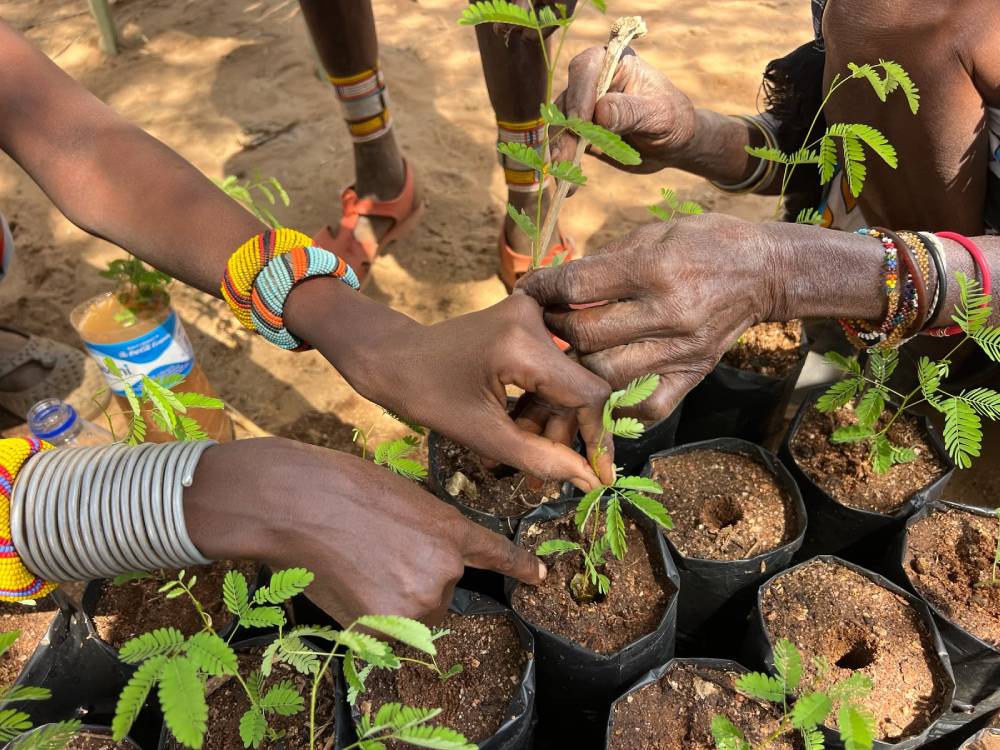 The nursery
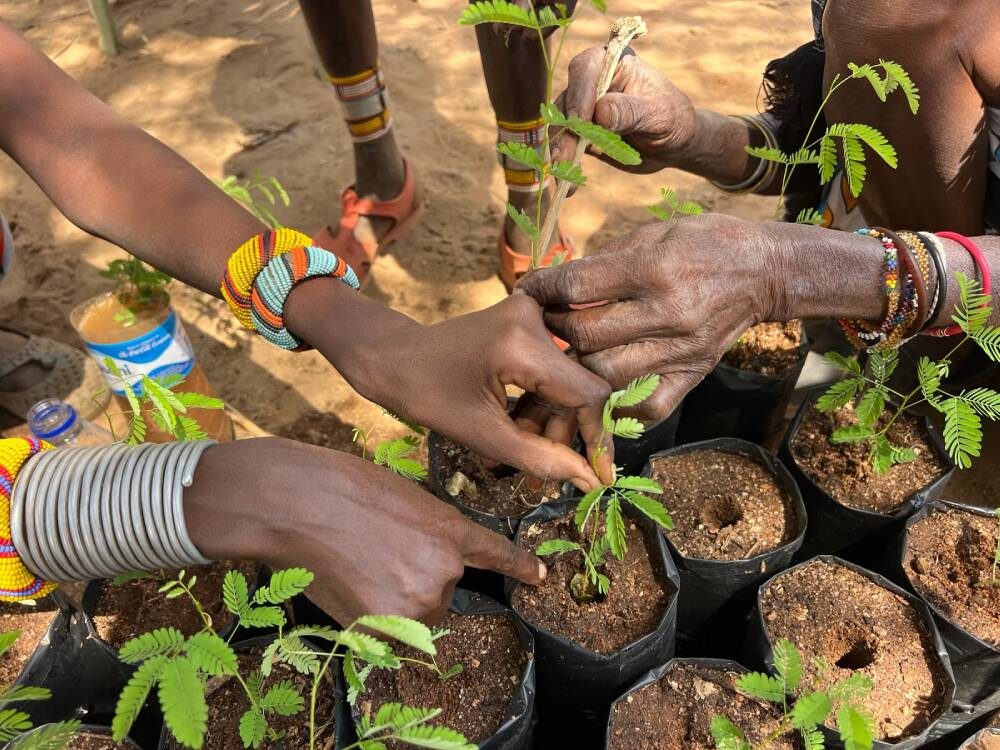
In May, one year after their initial training and with additional hands-on training and support from the Centre for Ecosystem Restoration Kenya (CER-K), which came directly to the newly constructed nursery at the Lion Kids Camp, Mama Simba planted 2000 seedlings spanning 23 species of trees and shrubs. Every single one is indigenous. Every single one was carefully selected not just for lions, but for the full ecosystem: for wildlife, for livestock, and for the communities who share and steward this landscape.
Twenty-three indigenous species, each with a role to play. Some of the seedlings will be planted to fill in the gaps where the invasive Mathenge species has been removed. Others will be planted across the landscape where they will grow into the dense thickets that give lions the cover they need to hunt. Overall, many will provide shade, stabilise soils, support pollinators, or offer fodder for livestock. Healthy ecosystems are not built from a single species; they are interlaced with many, each supporting the others. That is exactly what Mama Simba is rebuilding here.
Growing Momentum
For Mama Simba, this is a historic milestone. It centres the knowledge, the labour, and the investment of the women who know this land best. Women who live alongside lions, who understand the rhythms of this ecosystem in ways no outside expert can fully replicate.
What makes this effort extraordinary is not just its ecological ambition. It is the model it represents: that conservation is most powerful when the communities at its heart are initiating the activities. Mama Simba did not wait for habitat recovery to happen to them. They made it happen themselves.
Next steps
Watching an initiative grow from the ground up, from a simple idea into a tangible, living, breathing reality, has been nothing short of inspiring. The nursery is a beginning, not an end. As the seedlings grow and are eventually transplanted into the wider landscape, the impact of this work will spread beyond the nursery walls, taking root in the soils of northern Kenya.
Images by Simatwa Ngachi & Ewaso Lions