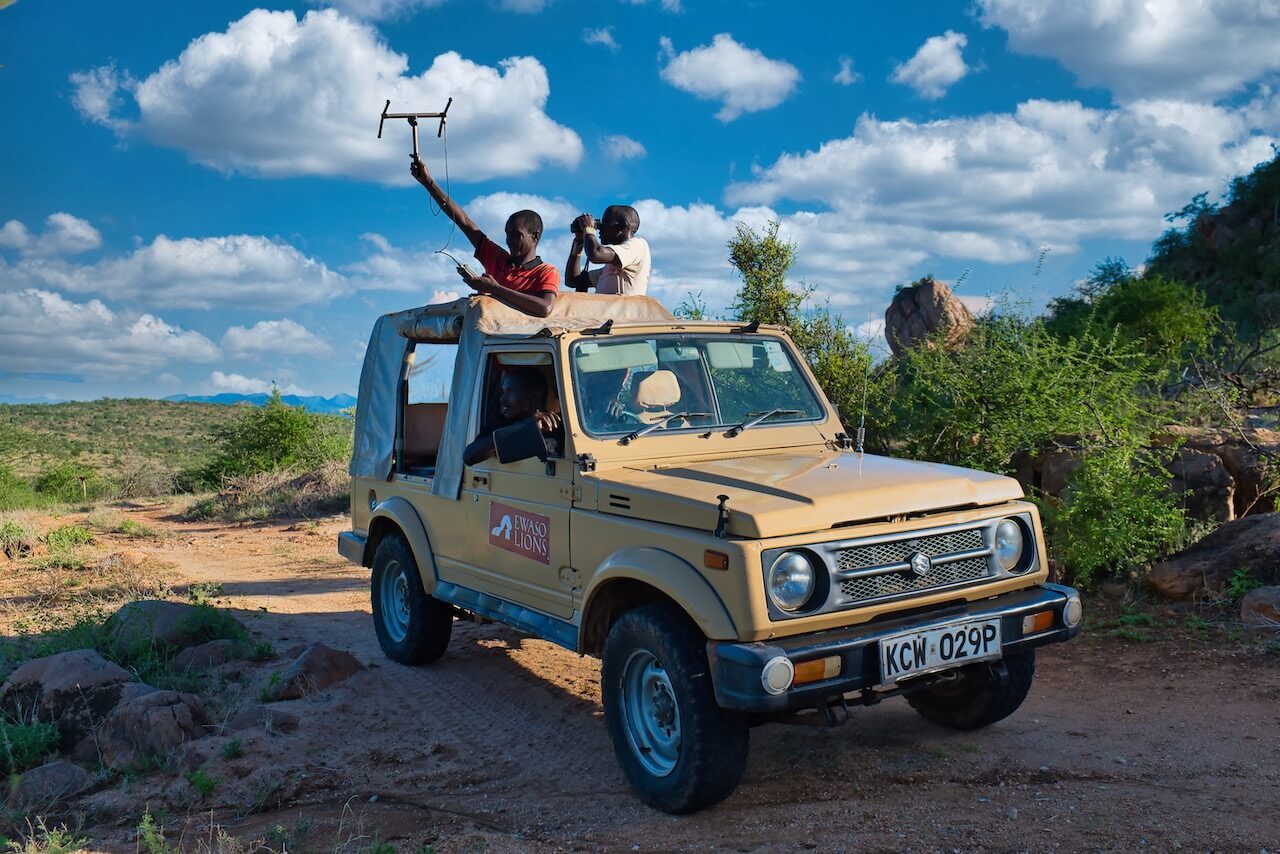
As 2014 comes to a close, we feel very thankful for your support this past year. We wish you a very happy New Year!
Warm greetings,
The Ewaso Lions Team

As 2014 comes to a close, we feel very thankful for your support this past year. We wish you a very happy New Year!
Warm greetings,
The Ewaso Lions Team
UPDATE: A generous donor has pledged to match every donation up to $7,500! This means if you donate $100, then Ewaso Lions gets $200 just like that. This matching gift will go until the end of this month, so please donate today. A huge thanks to the Peacock Family for their generosity!
As 2015 quickly approaches, all of us at Ewaso Lions want to thank you for your support. This year was our most demanding yet. Our mission of promoting coexistence between local communities and lions of northern Kenya has faced new and escalating challenges.

Lentim, a young male, was recently spotted in Westgate, a community area.
For one, we faced a drought which has drawn more people and their livestock into the area. More people and livestock means more conflict. In fact, just this month lions killed 14 cows and one camel in just one week! But our team managed to respond in time to prevent any retaliation. We responded to 97 incidents of conflict, and stopped lions from being killed on 8 occasions. That’s progress.
Our initiatives this year included:
– The launch of our Mama Simba program, which engages Samburu women in conservation and provides education and training.
– Warrior Watch continued to reverse negative attitudes towards lions and stopped the killing of lions. We added 3 new warriors in 3 new areas, bringing the total number of warriors to 15.
– Hiring an Education Officer to strengthen the conservation impact of our education initiatives.
– Laying the groundwork to identify and secure important lion habitat between Samburu and Laikipia. Together, this area is home to Kenya’s third largest lion population with 350 individuals.
I mean this when I say we could not do this without your support.
Our work is not done – there are less then 2,000 lions left in Kenya. Our annual budget for 2015 is $190,000 and we have a funding gap of $15,000. Please help us reach our goal, so together – our team, the warriors, the women, and YOU – can keep northern Kenya’s lion population safe.
The Peacock Family has stepped up with a generous offer of a matching gift to help reach our goal. They will match each incoming donation up to $7,500 until the end of the month. Please donate today!
You can easily donate online, or through other methods which are explained on our site: www.ewasolions.org/donate
Please help us reach our goal of raising $15,000 by January 1st.
Many thanks and best wishes for the holidays.
– The Ewaso Lions Team

This is the second part of a feature on Jeneria Lekilelei, Ewaso Lions Field Operations and Community Manager. Click here to read Part 1.
You came up with the idea behind Ewaso Lions’ flagship outreach program Warrior Watch. Can you explain your motivation for this program and its progress since its launch in 2010?
I came up with the idea for Warrior Watch after I saw the challenges we were facing to keep lions safe. A warrior’s job is to protect livestock, and when livestock are killed it’s the warriors who need to respond. The only way we can succeed in protecting lions is to get the warriors involved in conservation decision-making. We can make them ambassadors to keep lions safe.
Since 2010, the program is progressing very well. We have not lost any lions in Westgate since 2010 because of my warriors.
When I was a Scout several years ago, I would never see tracks. Now, the tracks are all over. Lions are now present in Westgate. This is progress. There is a tolerance to lions now. People have accepted it. The message has spread and the warriors have changed people. I bump into a random warrior and he will stop me and say, “There are lions there.”
The role I play in Warrior Watch is to give the warriors supervision, leadership and guidance. I help them to become like myself. I want them to talk, talk, talk about lions non-stop like I do. I give them the details about why we need lions here. I say to them, “We need to protect lions. Look how far you have come. You can read and write now. Before, there was nothing.” I also coordinate with the warriors based on lions’ movements. Then they can to go to bomas [livestock enclosures] and talk about lions and tell people not to kill lions, and to also avoid the areas with lions.

Jeneria (left) trains a member of Warrior Watch how to use GPS and record data.
On a number of occasions you have been successful in preventing community members from killing lions following incidents of livestock predation. Can you explain how you have approached conflict situations like this and managed to resolve them peacefully?
The first thing I do is to try to find a way to stop people from going after the lions. You just have to stop them. I say, “We have already lost a cow. We will lose two things if you kill that lion”. You need to build a relationship with the people and understand how they feel when they lose a cow. I see their pain, and I know myself how painful it is.
I let them understand that I feel the same as them. People respond to that. After that, I identify the people who might go after the lions to kill them. They may be the people who control the others. Sit with them, look straight in to their eyes and speak to them calmly. Let them understand the general lion situation. They see the tracks of one lion moving round and round and think that these are the tracks of 100 lions. They don’t know that there is only one lion or that we have so few left.
I also tell them how the rhinos are far away now and how we lost them by killing them. Now we pay money to see those rhinos. There are lots of places now named after those animals we have lost, like Mugur Muny (“rhino dam”). I say, “Let’s not lose lions the way we lost the other animals.” I tell them that we only have 40 lions within this whole region. I put all the cultural things together with conservation issues so that they get the whole picture.
I talk as a warrior and as a Samburu so they know that I understand how they feel. They then calm down. I don’t leave them alone after that. Instead, I communicate with them all the time. I call them on phone and make friends with them. They need to know that I still care about them.

Jeneria works to reduce human-lion conflict. He and his warriors construct predator-proof bomas to protect livestock from predators.
You spend a lot of time in the field and monitor approximately 40 lions. Do you have a favorite lion?
Nanai is my favorite lioness. When she was born in 2010, she joined two others, her cousins. The other two were very active and always on a hunting mission or sleeping. Nanai was very calm and she was very beautiful. She is very quiet and never bothers the others. She would follow the rest. I would sometimes feel sorry for her because she was always the last, whether she was looking for food or just walking.

Nanai, Jeneria’s favorite lioness.
Can you describe your most memorable encounter with a lion(s)?
Wow. There is one. I woke up at 5am and it was during Lguret’s collaring. I went all through Samburu and Buffalo Springs for days looking for Lguret. The vet was there and he said he would leave if he didn’t find the lion. Finally, at 4 pm we found Lguret sitting near the main road. Everyone was tired and exhausted. I stood for hours looking for him. Anytime I pass that area now, I always remember him sitting there.
I also discovered how clever lions are. One day we found male lions, very scared. Normally they are so calm, so I knew something was wrong. After looking closely, we saw blood all over their legs. We followed their tracks back and found they had killed a camel. The lions were scared because they killed livestock so they knew they were in trouble. I learned that lions also know when they make a mistake.
I remember finding Naramat after she had disappeared for many years. I was so excited because we know all the lions and we may miss them for a month or a few weeks, but I’ve never identified a lioness after she disappeared for three years.
What was the most difficult moment for you?
When Loirish was killed, that was my worst moment. I had known this lion for so many years and we had been following him. He had become part of my family. When he died, it was like I was missing one of my relatives. Seeing his head burned, I felt like a human being had died. I went to that community who killed Loirish and I really fought with them. That was the negative side of my work. It was something I will never forget.
What do lions mean to you?
Lions are my life. I have given my brothers all my cows to look after back home. Lions are my cows now.
Through your work you have travelled beyond Kenya. What has been your favorite conservation-related experience outside of Kenya?
I have had the chance to travel internationally, beginning with the United States. I didn’t think I would ever go there in my life. It was my first time on a plane, and I didn’t think it would leave the ground because it was so big!
Facing all these challenges in Samburu, you feel lonely. You are stressed by the community, stressed by people wanting to kill lions. Then I met all these people in the U.S. who support me and who care about wildlife. This gave me a lot of strength. I don’t feel lonely anymore because people support what I do.
I met famous people like Jane Goodall who have already passed through these challenges and are still doing conservation work. She is amazing and has been doing this for so long. That’s when I decided that one day I will say, “I have worked with lions for over 50 years”.
I also visited our partners from Niassa Lions in Niassa National Reserve in Mozambique. They work 24 hours a day, like us. They go through huge bushes the whole day making sure lions are safe. Exchanging knowledge with the community in Niassa has given me hopes that I will be able to face whatever comes for the lions, because I know I am not the only one.

Jeneria had the privilege of meeting Dr. Jane Goodall during his trip to San Francisco in 2013.
In your eyes, what do you think has been Ewaso Lions’ biggest achievement to date?
We have achieved a lot. Having lions live safely in the community area is our biggest achievement. Even children and women tell us that lions are moving through the village. We know that people won’t go track and kill the lions.
For Samburus, lions have been such problem animals. To see the community members coming to say sorry when we lost a lion like Loirish was a huge thing. To get a Samburu person to say sorry is the biggest success for me, being a Samburu. It means our work is working.
To be known globally is a big achievement as well. We got the Whitley Award and also the National Geographic Emerging Explorers award. This means that we are getting recognized internationally for the great job we are doing.
What are your hopes for the future of Ewaso Lions?
I hope Ewaso Lions will exist forever to educate the Samburu people. I also hope we expand to new areas. One of the challenges we face now is in faraway places where there is no conservation. When people from those places come here, we are challenged because they don’t understand conservation. When we expand to other areas, those people can be changed too. And if we expand, then there is hope for lions in all of northern Kenya.
[vc_row][vc_column][vc_column_text]December 17, 2014
Meet Jeneria Lekilelei, a young Samburu warrior who comes from the Sasaab area in Westgate Community Conservancy, Samburu, Kenya. Jeneria started working with Ewaso Lions in 2008 as a Lion Scout and has since taken a substantial leadership role in his current position as Field Operations and Community Manager. Jeneria is a wildlife hero and true ambassador for lions, wildlife and conservation in Kenya. In this two part series, Jeneria tells us his story.[/vc_column_text][/vc_column][/vc_row][vc_row][vc_column][vc_single_image image=”7970″ img_size=”full” add_caption=”yes”][/vc_column][/vc_row][vc_row][vc_column][vc_column_text]Jeneria Lekilelei, Ewaso Lions Field Operations and Community Manager. Photo by Tony Allport.[/vc_column_text][/vc_column][/vc_row][vc_row][vc_column][vc_column_text]You come from Sasaab village here in Westgate Conservancy. Can you describe what it was like growing up here as a child/young moran (warrior)?
When I was a young boy, I used to herd livestock. Conservation was so unknown to me. I didn’t care about wildlife. I grew up looking after goats, sheep and cows. I would leave the village every day to look after them and wildlife would chase me.
My family is very big, as my father had three wives. My mother had eight children, my stepmother has seven children, and my other stepmother has two children, so it is a very big family.[/vc_column_text][/vc_column][/vc_row][vc_row][vc_column][vc_column_text]Has wildlife conservation always been important to you?
Wildlife used to be important to me only because we ate its meat. When I was young, my father would kill a gerenuk and we would eat. As a boy, I would kill dik diks and eat them. I didn’t know about conservation, we didn’t have conservancies, and no one was doing conservation work. Wildlife caused huge problems, killing livestock. Elephants would kill goats and humans if they came across them.
I hated lions so much before. They were not meaningful in my area and only caused problems. Lions still cause problems with livestock now, but I also realize that they give us a lot of benefits. If we have lions here, it is like having gold in this area.[/vc_column_text][/vc_column][/vc_row][vc_row][vc_column][vc_column_text]When did you start to develop an interest in conservation, and did anything in particular spark this interest?
Joining the Ewaso Lions team and getting involved in conservation is what changed me. Because of my culture I hated lions because they killed my livestock, but then I changed. Before Ewaso Lions was here, there was no education in the village, which was a problem. Going on safaris to other places where there is conservation also helped me learn.[/vc_column_text][/vc_column][/vc_row][vc_row][vc_column][vc_column_text]Traditionally, the role of a warrior – such as yourself – has been to protect your community and livestock from harm. Since lion predation is a significant cause of livestock loss, why have you chosen to support lion conservation in this area?
Before Ewaso Lions, when I knew nothing about lions, I would have said that I hated all predators because of the loss they caused me. With the education that I got from Ewaso Lions, I saw how people could live with predators.
I look at Samburu as part of a bigger picture now. Before, Samburu was my world and I only thought of myself. I didn’t see any benefit from lions to myself alone. Now, I think widely and about what is happening at a larger level. From a conservation point of view, because the number of lions in Kenya is so low, I have seen that there is a reason for me to protect lions. I couldn’t have taught others from my generation if I didn’t know anything about lions. Lions have created benefits for everyone. Children go to school, and many of them would be sitting at home instead. My warriors who had never been to school now know how to read and write. This is because of lions. It is also good for our project to tell people how few lions we have so that my community wants to work harder at keeping the few lions that we do have alive for cultural reasons.[/vc_column_text][/vc_column][/vc_row][vc_row][vc_column][vc_column_text]What role do lions play in the Samburu culture?
It is a very important animal. We believe that if lions are present, there will be no bad droughts. When lions roar in the early morning, we think this is a sign of rain and there will be no drought. Nothing else will give us hope during a drought except a lion’s roar.
We believe we came from the same place as wildlife. Some families belong to the Elephant Family, and some families belong to the Lion Family, called “Lparasoro.” A lion roaring sounds like “L-PA-ra-soro”. Those from the lion family cannot kill lions.
It is a very important animal in our culture due to all the ceremonies we have in our lives. I also believe without lions, there would be no circumcision ceremonies for the warriors. What would happen if we didn’t have lions during our ceremonies?
Also in my culture, if livestock is killed by lions, it means good luck. We should not be stressed if we lose one to lions. The good luck means we will get more livestock in the future. If we have four cows for example, we say one is for a predator, one is for a trench, like if a cow falls in a trench and breaks the leg and dies. One is yours, one is to give to someone like a relative who may not have one. This means if either one of these happened, you should not get angry because it is part of your beliefs.[/vc_column_text][/vc_column][/vc_row][vc_row][vc_column][vc_single_image image=”7971″ img_size=”full” add_caption=”yes” alignment=”center”][/vc_column][/vc_row][vc_row][vc_column][vc_column_text]
Lions are very important in Samburu cultural practices. Photo by Ewaso Lions.
[/vc_column_text][/vc_column][/vc_row][vc_row][vc_column][vc_column_text]As a warrior you would kill lions to prove your manhood. What has changed now? Do warriors still kill lions for cultural reasons?
Because of education, we don’t kill lions like we did before. Kenya Wildlife Service now brings us skins that they already have to use during cultural ceremonies. People are now seeing the benefit of lions so they won’t kill them, and the warriors have seen that they don’t have to kill lions to show their strength.[/vc_column_text][/vc_column][/vc_row][vc_row][vc_column][vc_column_text]What do you see as critical to the success of conservation efforts in this area?
Conservation works when we involve and educate the community. I believe that the major challenge for me was lack of education and not understanding the value for having wildlife. It is important to involve all the different demographic groups within the area to show them successful conservation, to show them wildlife positively, and to give them close-up wildlife experiences so they can understand and love wildlife. Many people will tolerate lions, but I believe some will actually love lions. I was a community member like them and now I love lions. Hopefully a quarter or half the population will love lions like I do.[/vc_column_text][/vc_column][/vc_row][vc_row][vc_column][vc_column_text]How did you get involved with Ewaso Lions?
I was hired as a Scout in 2008. I went to work early in the morning wearing my green uniform and boots. I really disliked this work. I didn’t like wearing a uniform and felt that it kept me from succeeding in my work by pulling me out from my warrior class. I was unable to interact with my peers because they didn’t see me as a warrior, just as a Scout. I really wanted to become a field person. I didn’t know this at first, but as soon as I came to do fieldwork, I discovered this is really what I wanted to do in my life. I wanted to look for lions and sit with them all day.[/vc_column_text][/vc_column][/vc_row][vc_row][vc_column][vc_column_text]Was there a key moment that made you realize that you wanted a change?
One day Shivani took me to Shaba National Reserve, where I had never been before. Seeing this new place and then finally finding lions in Shaba made me more then excited. The work was very hard: standing all day in the back of the bouncing vehicle looking in every single bush. Finally, we found the lions. It made the whole time I was standing feel like nothing. All of a sudden I was not tired. That really clicked in my mind and realized I wanted to be in the field with lions.
We also went to the Maasai Mara and saw a place where the Maasai live. Seeing a population of 100 hyenas and 30 lions in one place was a very good moment for me. I could come back and tell my community, “You guys are joking when you see one lion. Mara has 30 lions in one place”. That was very good.[/vc_column_text][/vc_column][/vc_row][vc_row][vc_column][vc_single_image image=”7972″ img_size=”full” alignment=”center”][/vc_column][/vc_row][vc_row][vc_column][vc_column_text]Jeneria (center) got trained several years ago to use radio telemetry to track collared lions. Photo by Ewaso Lions.[/vc_column_text][/vc_column][/vc_row][vc_row][vc_column][vc_column_text]What does your role as Ewaso Lions Field Operations and Community Manager involve? Could you describe a typical day in the life of Jeneria?
My day-to-day role is to do lion monitoring. This is my favorite work. I locate the lions within our study area and then sit in the vehicle next to them. I like to understand their movements so we can control conflict with humans. Understanding lions’ movements can keep them from being killed by the community. I also work with my warrior team to coordinate their work based on the movements of the lions.
If there is anything to do with the community that is related to the lions it becomes another job of mine. I deal with conflict, hold meetings and much more.[/vc_column_text][/vc_column][/vc_row][vc_row][vc_column][vc_single_image image=”4578″ img_size=”full”][/vc_column][/vc_row][vc_row][vc_column][vc_column_text]Jeneria and his field team monitoring lions in Samburu. Photo by Ewaso Lions.[/vc_column_text][/vc_column][/vc_row][vc_row][vc_column][vc_column_text]What do you find is the most rewarding aspect of your work?
Being passionate about lions when I sit with them is very rewarding. I feel like lions are my friends or relatives. I didn’t think I would become like that. Even when I am home and not in the field I am asking about the lions on my phone. I am also very proud of Ewaso Lions, especially seeing how the warriors on our team speak in front of the community about conservation and change people’s views about lions. This is something I did not believe I could achieve.
What do you find is the most challenging aspect of your work?
Dealing with [human-lion] conflict issues is the most challenging thing ever. You have to make sure you are there at the right place at the right time, before people go after the lions and kill them. Or you have to go to a meeting and talk to very angry people who have lost many livestock to lions. People want to kill me then because of their anger. During the drought, it is also difficult to see livestock and wildlife dying. I feel the real struggles of livestock and people.[/vc_column_text][/vc_column][/vc_row][vc_row][vc_column][vc_single_image image=”7973″ img_size=”full” alignment=”center”][/vc_column][/vc_row][vc_row][vc_column][vc_column_text]Jeneria (white shirt) helps set up Lion Lights to protect cows from lion attacks, which reduces the likelihood of retaliatory killing. Photo by Ewaso Lions.[/vc_column_text][/vc_column][/vc_row][vc_row][vc_column][vc_column_text]What has been your proudest moment since you started working for Ewaso Lions in 2008?
I am very proud of myself for identifying individual lions and knowing them all. I am so proud to see how I can go to the community and they will listen to me. Before, I was a random warrior running around and no one would listen to me. Now I can change people’s attitudes towards lions. I am proud of how far I have come. I am also so proud to see how many people I have changed – people who hate lions, who now don’t hate them. Calming down a very angry person and convincing them not to kill a lion makes me happy. I am also proud how we involve all the demographic groups – from not only warriors, but also elders, mamas and kids.[/vc_column_text][/vc_column][/vc_row][vc_row][vc_column][vc_column_text]Source: https://blog.nationalgeographic.org/2014/12/17/from-goat-herding-to-lion-conservation-the-story-of-a-samburu-warrior-part-1/[/vc_column_text][/vc_column][/vc_row]
Meet Jeneria Lekilelei, a young Samburu warrior who comes from the Sasaab area in Westgate Community Conservancy, Samburu, Kenya. Jeneria started working with Ewaso Lions in 2008 as a Lion Scout and has since taken a substantial leadership role in his current position as Field Operations and Community Manager. Jeneria is a wildlife hero and true ambassador for lions, wildlife and conservation in Kenya. In this two part series, Jeneria tells us his story.

Jeneria Lekilelei, Ewaso Lions Field Operations and Community Manager. Photo by Tony Allport.
You come from Sasaab village here in Westgate Conservancy. Can you describe what it was like growing up here as a child/young moran (warrior)?
When I was a young boy, I used to herd livestock. Conservation was so unknown to me. I didn’t care about wildlife. I grew up looking after goats, sheep and cows. I would leave the village every day to look after them and wildlife would chase me.
My family is very big, as my father had three wives. My mother had eight children, my stepmother has seven children, and my other stepmother has two children, so it is a very big family.
Has wildlife conservation always been important to you?
Wildlife used to be important to me only because we ate its meat. When I was young, my father would kill a gerenuk and we would eat. As a boy, I would kill dik diks and eat them. I didn’t know about conservation, we didn’t have conservancies, and no one was doing conservation work. Wildlife caused huge problems, killing livestock. Elephants would kill goats and humans if they came across them.
I hated lions so much before. They were not meaningful in my area and only caused problems. Lions still cause problems with livestock now, but I also realize that they give us a lot of benefits. If we have lions here, it is like having gold in this area.
When did you start to develop an interest in conservation, and did anything in particular spark this interest?
Joining the Ewaso Lions team and getting involved in conservation is what changed me. Because of my culture I hated lions because they killed my livestock, but then I changed. Before Ewaso Lions was here, there was no education in the village, which was a problem. Going on safaris to other places where there is conservation also helped me learn.
Traditionally, the role of a warrior – such as yourself – has been to protect your community and livestock from harm. Since lion predation is a significant cause of livestock loss, why have you chosen to support lion conservation in this area?
Before Ewaso Lions, when I knew nothing about lions, I would have said that I hated all predators because of the loss they caused me. With the education that I got from Ewaso Lions, I saw how people could live with predators.
I look at Samburu as part of a bigger picture now. Before, Samburu was my world and I only thought of myself. I didn’t see any benefit from lions to myself alone. Now, I think widely and about what is happening at a larger level. From a conservation point of view, because the number of lions in Kenya is so low, I have seen that there is a reason for me to protect lions. I couldn’t have taught others from my generation if I didn’t know anything about lions. Lions have created benefits for everyone. Children go to school, and many of them would be sitting at home instead. My warriors who had never been to school now know how to read and write. This is because of lions. It is also good for our project to tell people how few lions we have so that my community wants to work harder at keeping the few lions that we do have alive for cultural reasons.
What role do lions play in the Samburu culture?
It is a very important animal. We believe that if lions are present, there will be no bad droughts. When lions roar in the early morning, we think this is a sign of rain and there will be no drought. Nothing else will give us hope during a drought except a lion’s roar.
We believe we came from the same place as wildlife. Some families belong to the Elephant Family, and some families belong to the Lion Family, called “Lparasoro.” A lion roaring sounds like “L-PA-ra-soro”. Those from the lion family cannot kill lions.
It is a very important animal in our culture due to all the ceremonies we have in our lives. I also believe without lions, there would be no circumcision ceremonies for the warriors. What would happen if we didn’t have lions during our ceremonies?
Also in my culture, if livestock is killed by lions, it means good luck. We should not be stressed if we lose one to lions. The good luck means we will get more livestock in the future. If we have four cows for example, we say one is for a predator, one is for a trench, like if a cow falls in a trench and breaks the leg and dies. One is yours, one is to give to someone like a relative who may not have one. This means if either one of these happened, you should not get angry because it is part of your beliefs.

Lions are very important in Samburu cultural practices.
As a warrior you would kill lions to prove your manhood. What has changed now? Do warriors still kill lions for cultural reasons?
Because of education, we don’t kill lions like we did before. Kenya Wildlife Service now brings us skins that they already have to use during cultural ceremonies. People are now seeing the benefit of lions so they won’t kill them, and the warriors have seen that they don’t have to kill lions to show their strength.
What do you see as critical to the success of conservation efforts in this area?
Conservation works when we involve and educate the community. I believe that the major challenge for me was lack of education and not understanding the value for having wildlife. It is important to involve all the different demographic groups within the area to show them successful conservation, to show them wildlife positively, and to give them close-up wildlife experiences so they can understand and love wildlife. Many people will tolerate lions, but I believe some will actually love lions. I was a community member like them and now I love lions. Hopefully a quarter or half the population will love lions like I do.
How did you get involved with Ewaso Lions?
I was hired as a Scout in 2008. I went to work early in the morning wearing my green uniform and boots. I really disliked this work. I didn’t like wearing a uniform and felt that it kept me from succeeding in my work by pulling me out from my warrior class. I was unable to interact with my peers because they didn’t see me as a warrior, just as a Scout. I really wanted to become a field person. I didn’t know this at first, but as soon as I came to do fieldwork, I discovered this is really what I wanted to do in my life. I wanted to look for lions and sit with them all day.
Was there a key moment that made you realize that you wanted a change?
One day Shivani took me to Shaba National Reserve, where I had never been before. Seeing this new place and then finally finding lions in Shaba made me more then excited. The work was very hard: standing all day in the back of the bouncing vehicle looking in every single bush. Finally, we found the lions. It made the whole time I was standing feel like nothing. All of a sudden I was not tired. That really clicked in my mind and realized I wanted to be in the field with lions.
We also went to the Maasai Mara and saw a place where the Maasai live. Seeing a population of 100 hyenas and 30 lions in one place was a very good moment for me. I could come back and tell my community, “You guys are joking when you see one lion. Mara has 30 lions in one place”. That was very good.

Jeneria (center) got trained several years ago to use radio telemetry to track collared lions.
What does your role as Ewaso Lions Field Operations and Community Manager involve? Could you describe a typical day in the life of Jeneria?
My day-to-day role is to do lion monitoring. This is my favorite work. I locate the lions within our study area and then sit in the vehicle next to them. I like to understand their movements so we can control conflict with humans. Understanding lions’ movements can keep them from being killed by the community. I also work with my warrior team to coordinate their work based on the movements of the lions.
If there is anything to do with the community that is related to the lions it becomes another job of mine. I deal with conflict, hold meetings and much more.

Jeneria and his field team monitoring lions in Samburu.
What do you find is the most rewarding aspect of your work?
Being passionate about lions when I sit with them is very rewarding. I feel like lions are my friends or relatives. I didn’t think I would become like that. Even when I am home and not in the field I am asking about the lions on my phone. I am also very proud of Ewaso Lions, especially seeing how the warriors on our team speak in front of the community about conservation and change people’s views about lions. This is something I did not believe I could achieve.
What do you find is the most challenging aspect of your work?
Dealing with [human-lion] conflict issues is the most challenging thing ever. You have to make sure you are there at the right place at the right time, before people go after the lions and kill them. Or you have to go to a meeting and talk to very angry people who have lost many livestock to lions. People want to kill me then because of their anger. During the drought, it is also difficult to see livestock and wildlife dying. I feel the real struggles of livestock and people.

Jeneria (white shirt) helps set up Lion Lights to protect cows from lion attacks, which reduces the likelihood of retaliatory killing.
What has been your proudest moment since you started working for Ewaso Lions in 2008?
I am very proud of myself for identifying individual lions and knowing them all. I am so proud to see how I can go to the community and they will listen to me. Before, I was a random warrior running around and no one would listen to me. Now I can change people’s attitudes towards lions. I am proud of how far I have come. I am also so proud to see how many people I have changed – people who hate lions, who now don’t hate them. Calming down a very angry person and convincing them not to kill a lion makes me happy. I am also proud how we involve all the demographic groups – from not only warriors, but also elders, mamas and kids.
Education is Crucial for Conservation
Tomorrow’s wildlife leaders must be equipped with a solid education today, empowering them to make informed choices to tackle the challenges facing Africa’s wildlife and people. Ewaso Lions has incorporated education into our conservation programmes from the beginning. Looking ahead, we are refining our approach to conservation education. Our new Conservation Education Program aims to maximize impact, streamline project administration, and evaluate for effectiveness.
Meet Kalastar

Kalastar, our new Education Officer.
We have hired a new Education Officer, Kalastar Lekalaille, to design, coordinate, and help carry out all our conservation education activities. These include supervising all students sponsored by Ewaso Lions, running the Wildlife Cinema program, supporting existing Wildlife Clubs at local schools and setting up new ones, maintaining educational materials, ordering new school supplies, teaching warriors from the Warrior Watch program, supervising the teacher for Mama Simba, coordinating logistics and designing agenda / curriculum for Lion Kids Camp, and helping evaluate each education activity to ensure conservation goals are being reached. Kalastar is a local Kenyan, from the Samburu village of Kiltamany and is based at our Conservation Camp in Westgate Conservancy.
Scholarships and School Support
Under the Ewaso Lions scholarship, school tuition is covered for four full academic years. We currently provide scholarships for the full secondary education of four secondary students and one college student. Additionally, Ewaso Lions will provide additional support to local schools in upcoming education programmes. Read more here.
Update on the Students
Ewaso Lions is currently sponsoring 4 students in secondary school and one college student. Recently, our Education Officer went to check in on the students’ progress. Here’s Kalastar’s report:

Solomon Lmantari, Wamba Boys School.
Solomon Lmantari is our student at Wamba Boys School. He in his third year of school. He has improved for the exams in biology, geography, business studies, and others. He has already done better than in the previous term’s exams. He is really showing positive attitudes towards education and we are looking forward to having impressive results during his final exams.

Saniki Lelengeju, Moi Girls Secondary School.
Saniki Lelengeju is in her second year at Moi Girls Secondary School in Maralal. I found that discipline-wise Saniki is among the top-rated students and, furthermore, she was selected to be the compound Prefect of the whole school! The Deputy Principal was also very glad to meet me at their school and was very happy to see Saniki with the new books we provided her.

Painoti Letabari, Kisima Girls School.
Painoti Letabari and Joy Letabare both attend Kisima Girls School in Kisima. Painoti is in her final year while Joy is in her second year of secondary school. I was very happy to hear that they are improving much more than in their previous term exams and that both are very disciplined students. The two girls promised that now they have the added advantage of revision materials they will definitely pass the rest of the other terms’ exams; which made me proud of them. Painoti was very happy about the French book and she said that has already started improving in French; her score having increased from 49% to 60%. Painoti is also looking at starting a tree-planting project at her school.
> Read a blog about Painoti’s background

Joy, Kisima Girls School.
Samson Lerosion is attending Buruburu Institute of Fine Arts in Nairobi. Samson has a long history with Ewaso Lions. He was one of the first students we ever sponsored. Under our scholarship, he completed four years of secondary school and graduated from Wamba Boys School. Samson is a gifted artist, and we encouraged him to develop his talents. He contributed amazing sketches of lions for our book Simba Stories. Now, Ewaso Lions is supporting his college tuition and we have high hopes that Samson will continue to grow and thrive.
Ewaso Lions would like to thank our amazing donors who support our scholarships and Education Program. If you would like to get involved, please contact us.
This Tuesday, December 2nd, you can join #GivingTuesday – the global movement to support charities and causes that are making a difference for good.
Please show your support by making your donation to Ewaso Lions on #GivingTuesday
2014 was another important year for our mission to promote coexistence between lions and local communities in northern Kenya. Thanks to your support, we were able to defend lions from retaliatory killings, start new programmes like Mama Simba, and expand our work into new areas. Click here to read more.
Watch and share Ewaso Lions’ #GivingTuesday video
 We made this short video to thank you for your support this #GivingTuesday
Warm greetings and many thanks,
The Ewaso Lions Team
> Click here to make a tax-deductible donation to Ewaso Lions
December 1, 2014
The African lion is a powerful flagship species synonymous with African rangelands; yet across the continent, lions and other great carnivores are disappearing at an unprecedented rate. Kenya is no exception to this grave trend, with the national population estimated at fewer than 2,000 individuals.
Here, like elsewhere in Africa, habitat loss and conflict with people rank amongst the most significant threats to lions. Rapid human population growth and encroachment into wildlife habitats have increased the incidence of human-lion interaction and conflict over recent decades. Conflicts, which can culminate in retaliatory persecution of lions, are often most pronounced amongst pastoralist communities for whom livestock depredation presents a significant actual—as well as perceived—risk to people’s livelihoods.
With anthropogenic threats central to the decline of the African lion, and with over 65% of lion range outside of formal protection (www.panthera.org), many believe that the success of carnivore conservation hinges on the involvement of local people. This is reflective of a broader shift in the conservation paradigm, where historical, largely top-down approaches that once disenfranchised local communities have been replaced by more integrated solutions that recognise local needs and empower communities to manage their natural resources and become more effective stewards of their environment.
In the Greater Ewaso Nyiro ecosystem of northern Kenya, the conservation organisation Ewaso Lions is working with Samburu communities, a semi-nomadic pastoralist ethnic group, to develop creative solutions to conserve lions and mitigate human-carnivore conflict. In this article, we present examples from Ewaso Lions’ portfolio of outreach activities, which are purposefully rooted in traditional cultural practices and are designed to build capacity and harness local expertise.
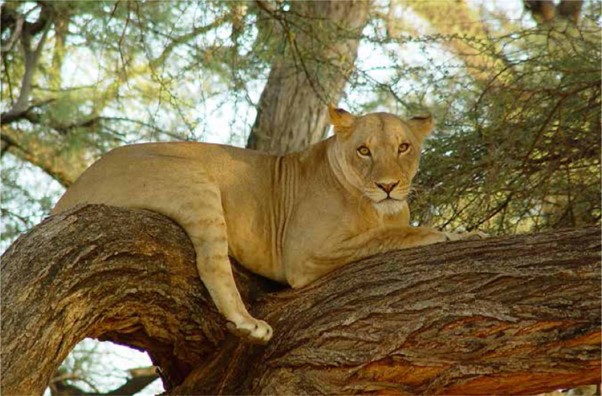 Nashipai in Samburu
Morans, the warrior age-class of the Samburu tribe, traditionally play a central role in protecting their communities and livestock from external threats, including predation by lions and other large carnivores. Yet, these young men represent one of the most neglected groups in conservation management and decision-making in northern Kenya. Recognising this gap, Ewaso Lions Field and Community Manager and Samburu moran, Jeneria Lekilelei, came up with the idea for the Warrior Watch programme. Being a moran himself, he realised that his age class could potentially be the best ambassadors for conservation as they spend most of their time in wilderness areas. Jeneria described how “Warriors are the eyes and ears in the bush and involving them is key to the conservation and security of region’s wildlife and people”. Launched in 2010, Warrior Watch, therefore, encourages morans to become active wildlife ambassadors and to improve community awareness and tolerance for lions and other carnivores.
The programme intentionally builds on morans’ traditional protection role by increasing their capacity to mitigate human-carnivore conflict. Morans reinforce livestock enclosures, teach herders good husbandry and communicate the message about the value of lions to their peers. Equally, through the incorporation of a participatory monitoring scheme, Warrior Watch leverages morans’ wide-ranging presence in wildlife areas to monitor threatened species and record conflict incidents, ensuring the collection of information that is critical to successful conservation monitoring and research over a far greater geographical scale than could be achieved by Ewaso Lions’ staff alone. To fulfil their role, Warrior Watch participants receive ongoing training in wildlife ecology and conservation, conflict mitigation techniques and basic data collection (including the use of GPS devices). Although provided with small food stipends, it is education which forms the principal incentive for participation, with many of these formerly non-literate morans now able to read and write and, vitally, to complete their own wildlife monitoring and conflict reports.
Despite the programme targeting only a small sub-section of the population (15 morans across 3 conservancies) and offering negligible financial rewards, an evaluation conducted in 2012 revealed how Warrior Watch had already gained widespread community support and significantly influenced local attitudes towards, and tolerance of, predators within the two year period following its launch. As so few morans are directly engaged in the programme, effective dissemination has been critical to this success, with participants sharing their knowledge and skills widely amongst other morans and members of their community.
The evaluation further revealed how Warrior Watch has been instrumental in empowering the moran demographic both politically (by increasing participation in conservation and associated decision-making) and socially (by enhancing respect for morans and building social capital). This empowerment, coupled with an increased understanding of the importance of carnivores and knowledge of wildlife-friendly conflict reduction strategies, is believed to have galvanised community support in the absence of significant monetary incentives. Although a formal evaluation of the ecological impacts of Warrior Watch has not been undertaken, in 2013 alone, Warrior Watch morans prevented lions from being killed on eight separate occasions, emphasising the conservation potential of this programme.
Samburu wazee (elders) are respected leaders who, in contrast to the moran demographic, are traditionally recognised as central decision-makers with a great capacity to influence change within their communities. Accordingly, the practices and decisions made by the wazee have a greater likelihood of being adopted than those enacted by other groups.
Despite the Warrior Watch programme’s success in mitigating incidents of human-carnivore conflict, limited communication across the wazee and moran demographics has hindered effective collaboration between the two groups. Jeneria, recognising this shortfall, felt that engaging the elders would be critical to continued conservation success within the area. Wazee Watch was, therefore, launched in July 2013 to capitalise on elders’ influence within communities and to provide a platform for intergenerational discussions about wildlife. Ewaso Lions meets with the eight wazee every two months to discuss challenges in conservation and often to seek assistance from the elders in various forums, related to security or conservation. The wazee also strive to reinforce the conservation message, representing Ewaso Lions at community meetings and supporting Warrior Watch morans in their efforts to diffuse potential conflict situations and to educate the community on the importance of carnivores. Consequently, the programme has the potential to further increase social capital, as warriors and elders unite to achieve this shared conservation goal.
As is common amongst pastoralist communities, gender roles within Samburu society are strongly marked, with women typically assuming responsibility for the household and not participating in decision-making at the community level. By virtue of their role fetching firewood and water, building and maintaining the homestead (manyatta) and tending to livestock (especially goats), they are central users and managers of natural resources and also frequently come into contact with wildlife.
Moreover, whilst elders and warriors are away with cattle, especially during the dry season, women often remain within the village. Consequently, they must deal with human-carnivore conflict first-hand should a predator attack livestock inside their village at night. Yet, Samburu women—like morans—have rarely been actively included in conservation activities in northern Kenya.
The Mama Simba (‘mother of lions’) programme was launched in September 2013 within Westgate Community Conservancy to harness women’s enthusiasm to participate in conservation and to fulfill their requests for education. Mama Simba equips women, who have limited exposure to conservation issues, with the knowledge and skills needed to reduce their environmental impact, effectively conserve wildlife and ultimately improve livelihoods.
Firstly, the programme delivers workshops informing women of the importance of conservation and sustainable practices and offers hands-on training in the identification of wildlife (including identification of carnivore tracks). Secondly, as part of a wider initiative entitled Boma Watch, it works with women to enhance livestock protection within the manyatta, encouraging reinforcement of livestock enclosure (bomas) with thornbush to restrict entry by carnivores, and enlisting their support to test and monitor experimental deterrents, such as ‘Lion lights’. Thirdly, the programme offers an alternative source of income, by commissioning the women—renowned for their exceptional beadwork skills—to make authentic beaded lion figurines. Ewaso Lions purchases these handicrafts directly from the women who make them, before selling them at international forums.
Finally, through Mama Simba’s educational arm, the programme teaches women to read and write. Acquiring literacy not only facilitates their participation in conservation-based activities but also empowers women in other aspects of their life, including their beadwork, food and livestock trade businesses. Anecdotal evidence further suggests that the women feel a strong sense of ownership and pride in the work they do as part of the Mama Simba programme and are now afforded a greater say within their communities. It is anticipated that the Mama Simba programme will be evaluated in the future using an evaluation toolkit created for the project.
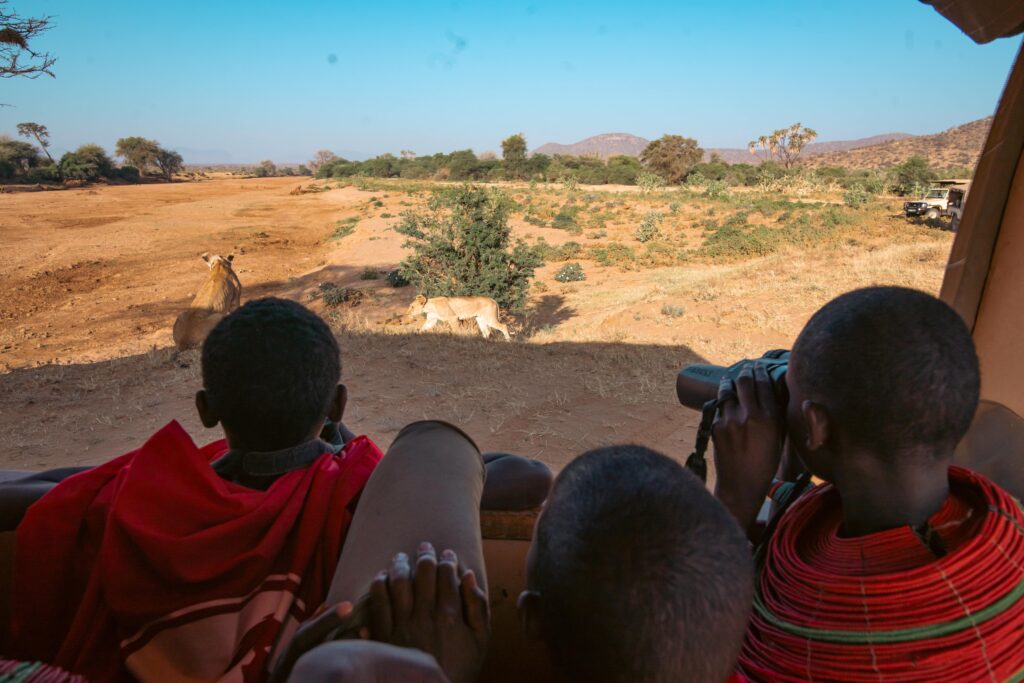 Children attending one of the Lions Kids Camps.
Despite living in close proximity to world-famous National Parks and Reserves, children in rural Kenya are rarely afforded the opportunity to observe wildlife at close range and to experience what attracts numerous tourists to their country each year. Instead, children’s perceptions of wildlife are shaped by largely negative interactions: for example, an elephant chasing a woman as she fetches firewood, a donkey mauled by hyenas, or the remains of a camel following an attack by lions. Since attitudes formed early in life tend to persist, environmental education aimed at children has great potential for fostering values and behaviours that support long-term conservation objectives and the development of a new generation of wildlife ambassadors.
The Lion Kids Camp is a four-day residential camp hosted by Ewaso Lions in collaboration with The Safari Collection tourist company. After securing their place in the camp through a creative arts competition, children from local primary schools are taken on game drives and bird walks, shown how to use binoculars and cameras; they listen to lectures from local conservation groups and perform in a wildlife conservation-themed drama competition.
An independent evaluation found that the inaugural Lion Kids Camp had not only provided children with a positive and enjoyable experience of wildlife but had significantly improved children’s knowledge of wildlife and conservation issues, the greatest change observed in those children with a lower baseline level of environmental education. Encouragingly, in the questionnaire surveys that followed the camp, all the children agreed that they would be sad if there were no lions in Samburu. Using the results of the evaluation, subsequent camps will continue to nurture our future rangers, wardens, tour guides and field officers.
Lions and other large carnivores are a major lure to tourists, with thousands of visitors heading to the National Reserves and Community Conservancies which comprises Ewaso Lions study area each year. In order to better engage the tourism industry in lion conservation and effectively exploit the knowledge and presence of safari guides and their clients, Ewaso Lions launched its citizen science project, Lion Watch, in April 2013.
Through Lion Watch, 20 professional guides and rangers, the majority of whom hail from local communities, have received advanced training in the identification and ecology of the region’s lion population and learnt how to monitor the species using identification cards, aging books and a specially designed smartphone app. The programme thus serves a dual function: firstly, it greatly increases the spatial scale of lion monitoring as guides record lion sightings during game drives and secondly, it promotes a richer tourism experience for visitors, who are also encouraged to upload their own photos to an online database. To date, more than 500 lion sightings have been recorded by guides within Samburu and Isiolo Counties, with this vital data contributing to evidence-based conservation decision-making.
Ultimately, Ewaso Lions believes that by integrating decisions and information from the local people who share the landscape with lions into conservation, we are better equipped to understand and conserve the lion population. As our programmes illustrate, current knowledge of lion conflict and movement on the ground can lead to effective community-owned solutions to human-carnivore conflict. In addition, our programmes support the idea that local incentives for conservation are multi-dimensional and the success of community-based conservation need not necessarily rely upon financial instruments. Instead, our approach recognises the importance of political and social benefits in the form of increased equity and empowerment and encourages local ownership of wildlife conservation practices. We firmly believe that this approach has helped galvanise community support for conservation and, in turn, ensured that the lion population within our study area is now stable and has increased to its highest number in a dozen years.